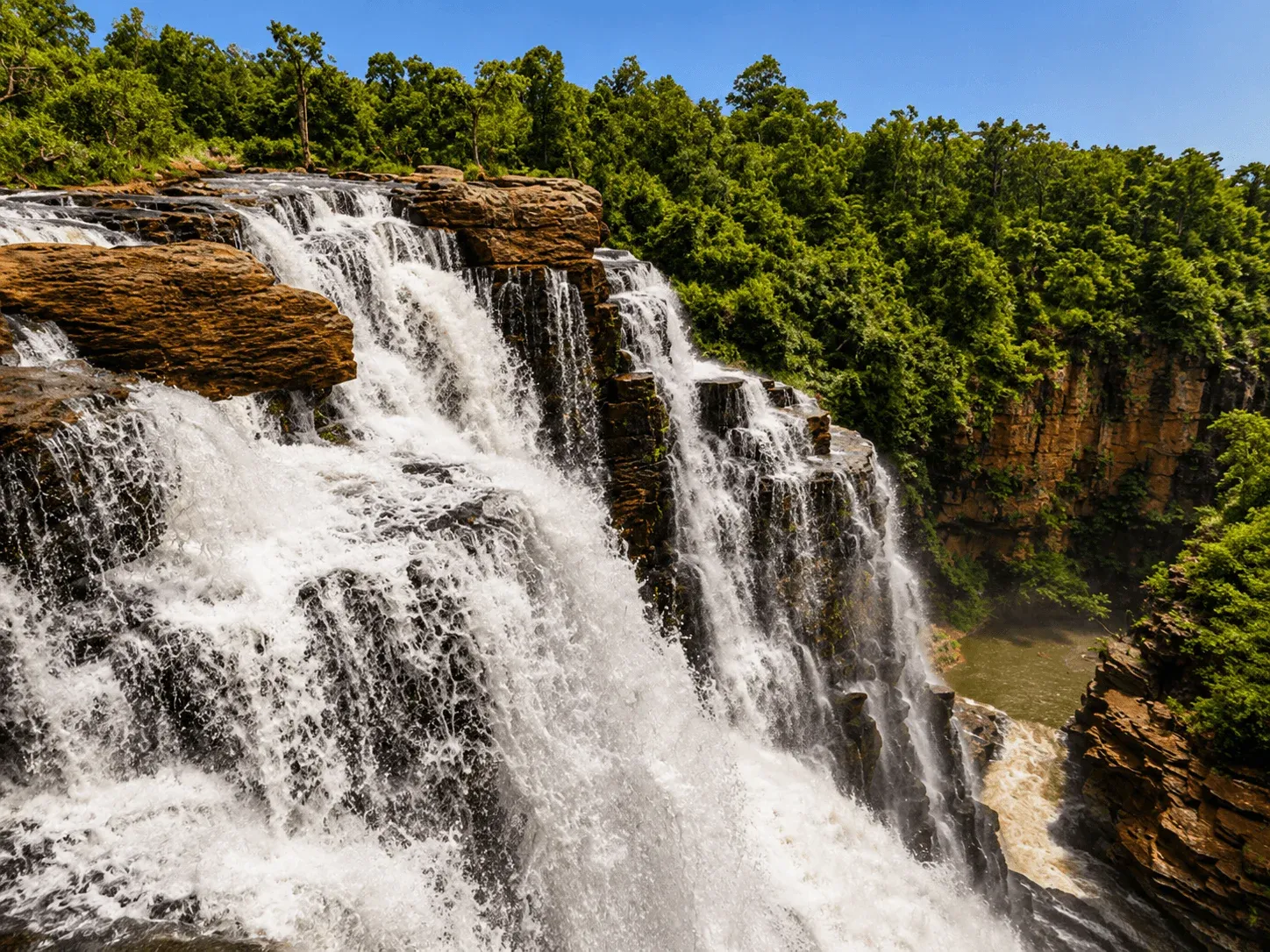
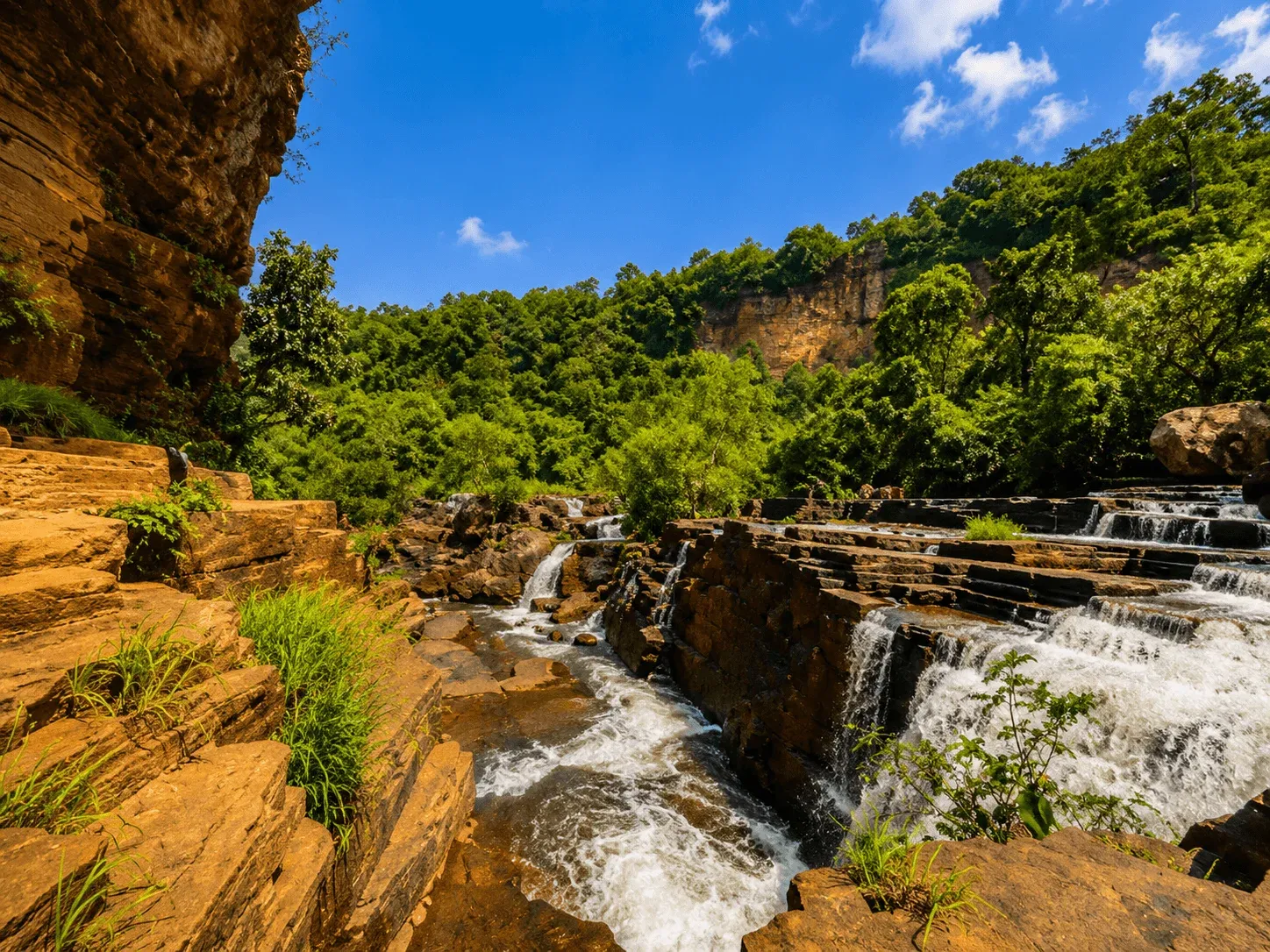
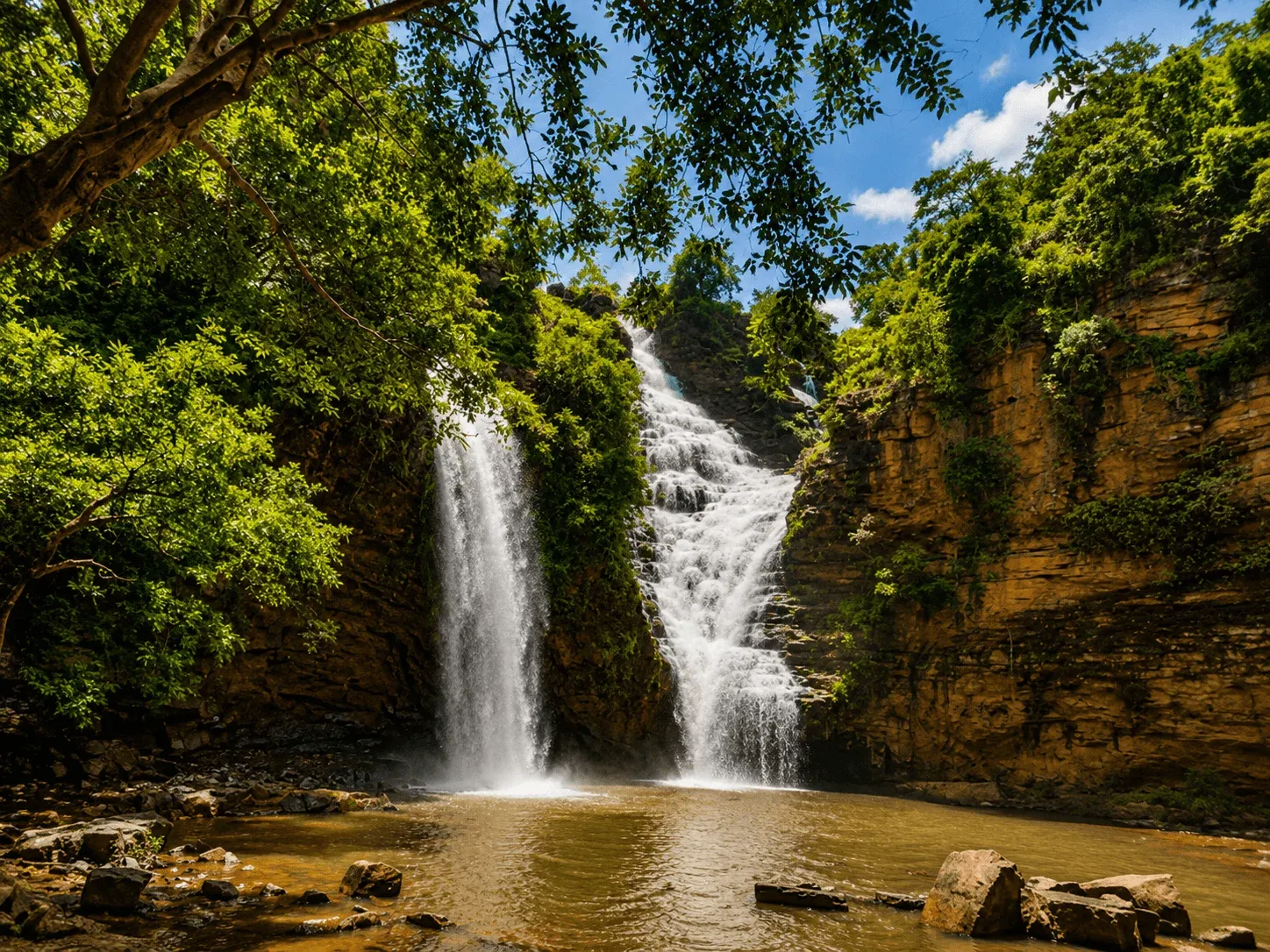
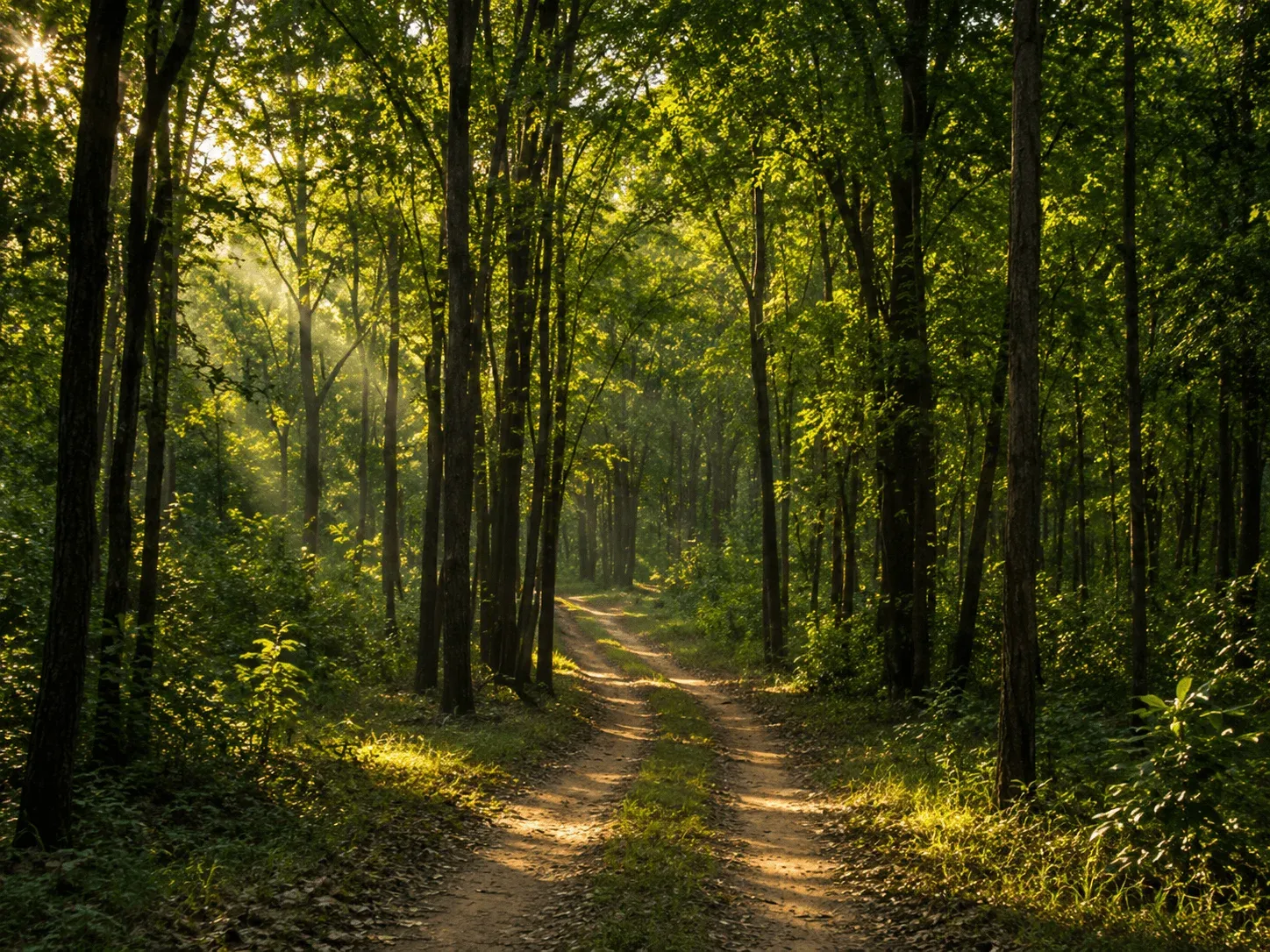
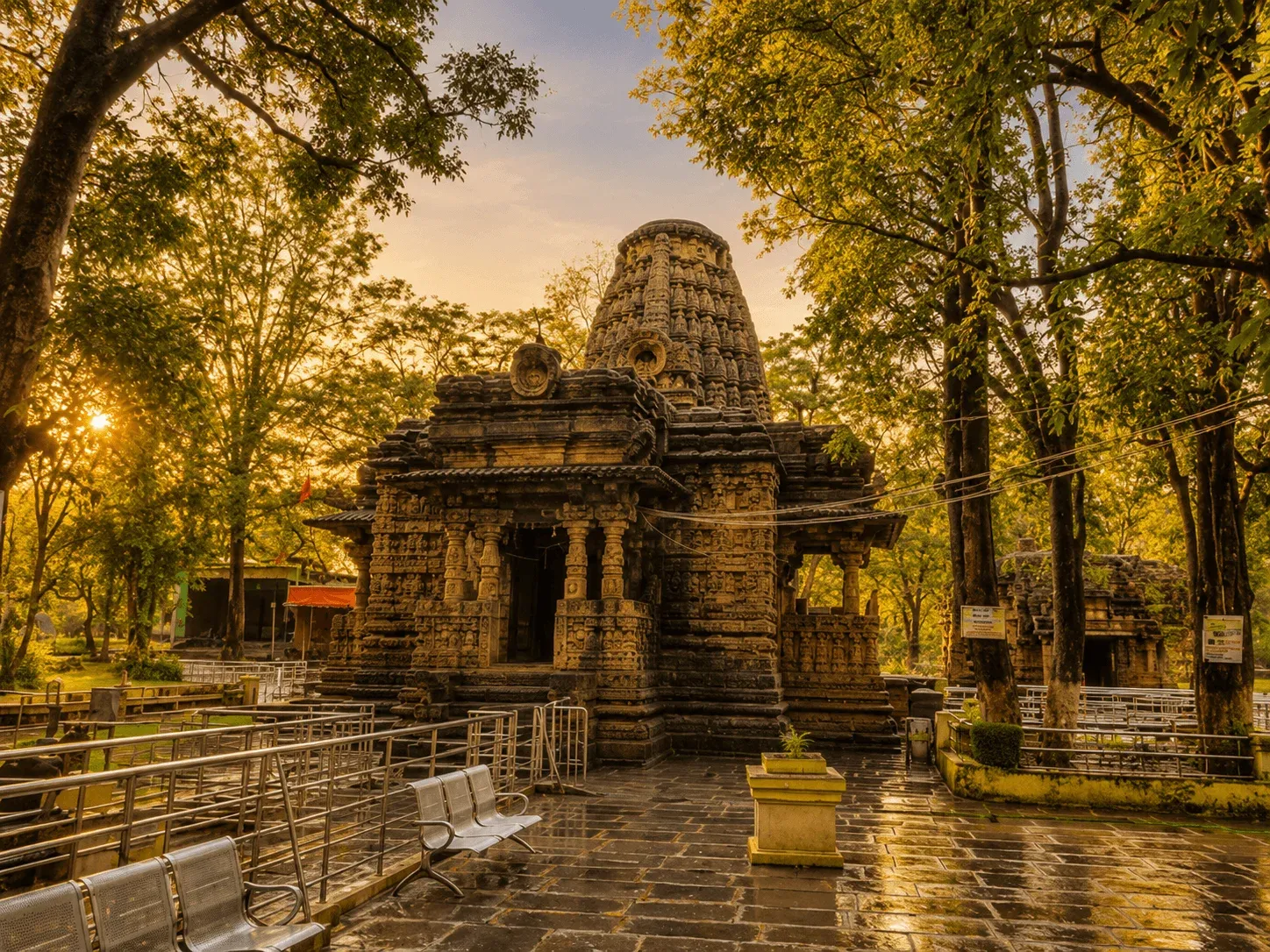
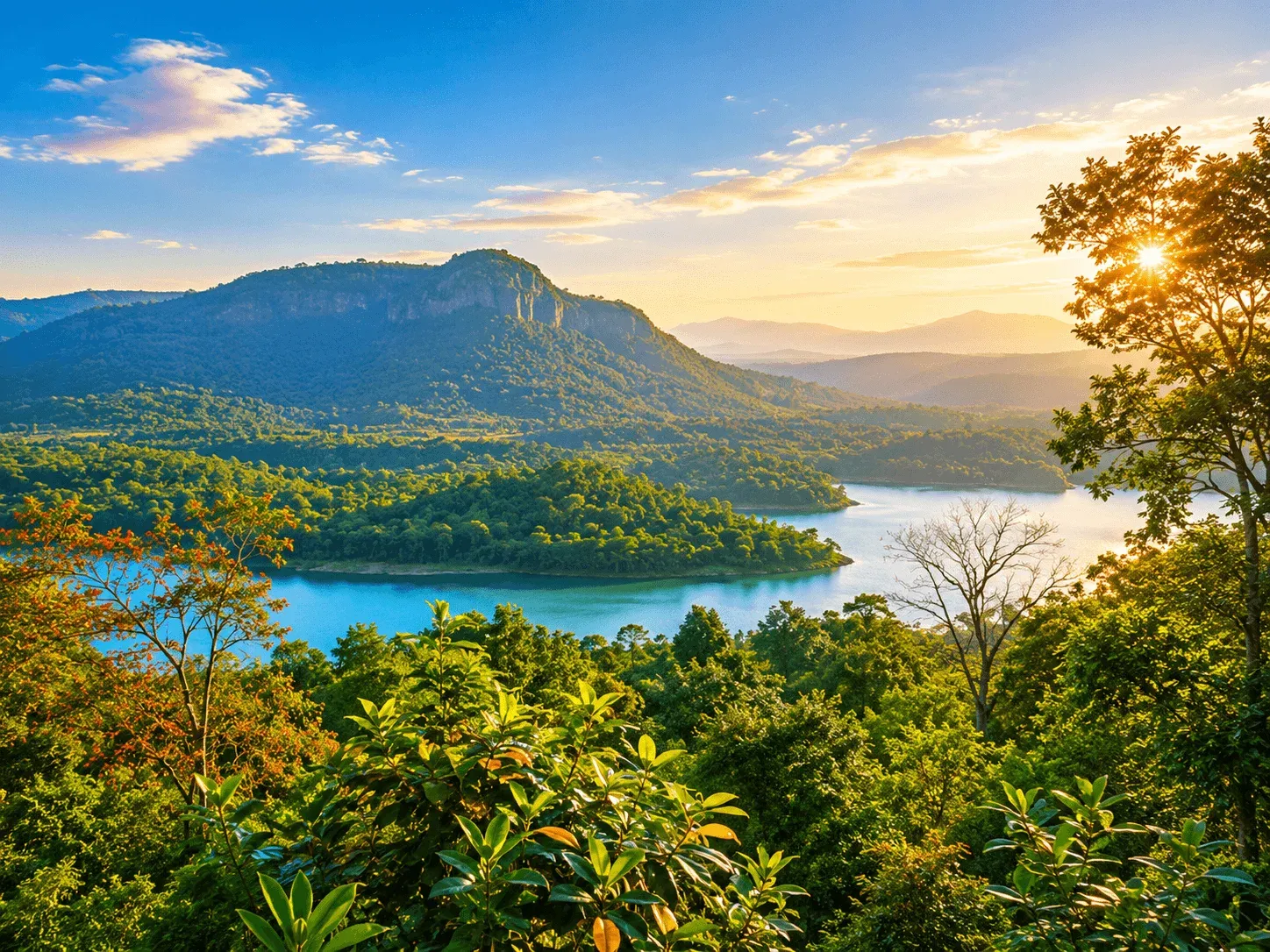
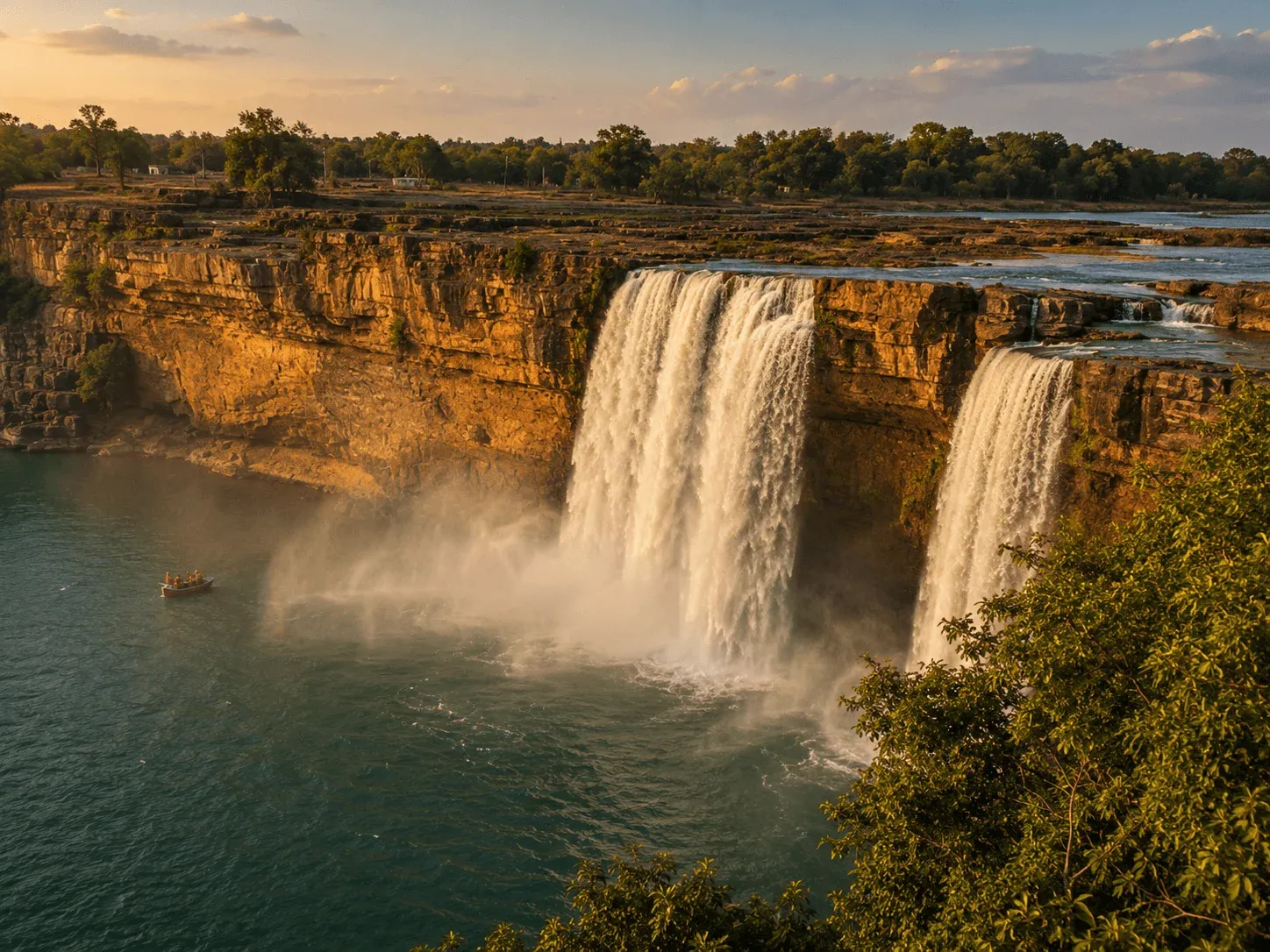
Tucked within the dense forests of Kanger Valley National Park in Bastar, Chhattisgarh, Tirathgarh Waterfall drops approximately 91 metres over seven distinct rock terraces, making it one of the most visually layered waterfalls in central India. The Kanger River feeds these cascades year-round, but the falls reach their spectacular peak during and just after monsoon when the water turns white with force against the dark jungle backdrop. At the base, a natural pool forms beneath the mist — cool and surprisingly serene — and the short forest walk leading up to the viewpoint adds to the whole experience in a way that few waterfalls in the region can match.
Tirathgarh Waterfall
Seven Tiers of Falling Water Inside the Heart of Kanger Valley
A Glimpse into the History of Tirathgarh Waterfall
Origins in the Kanger River
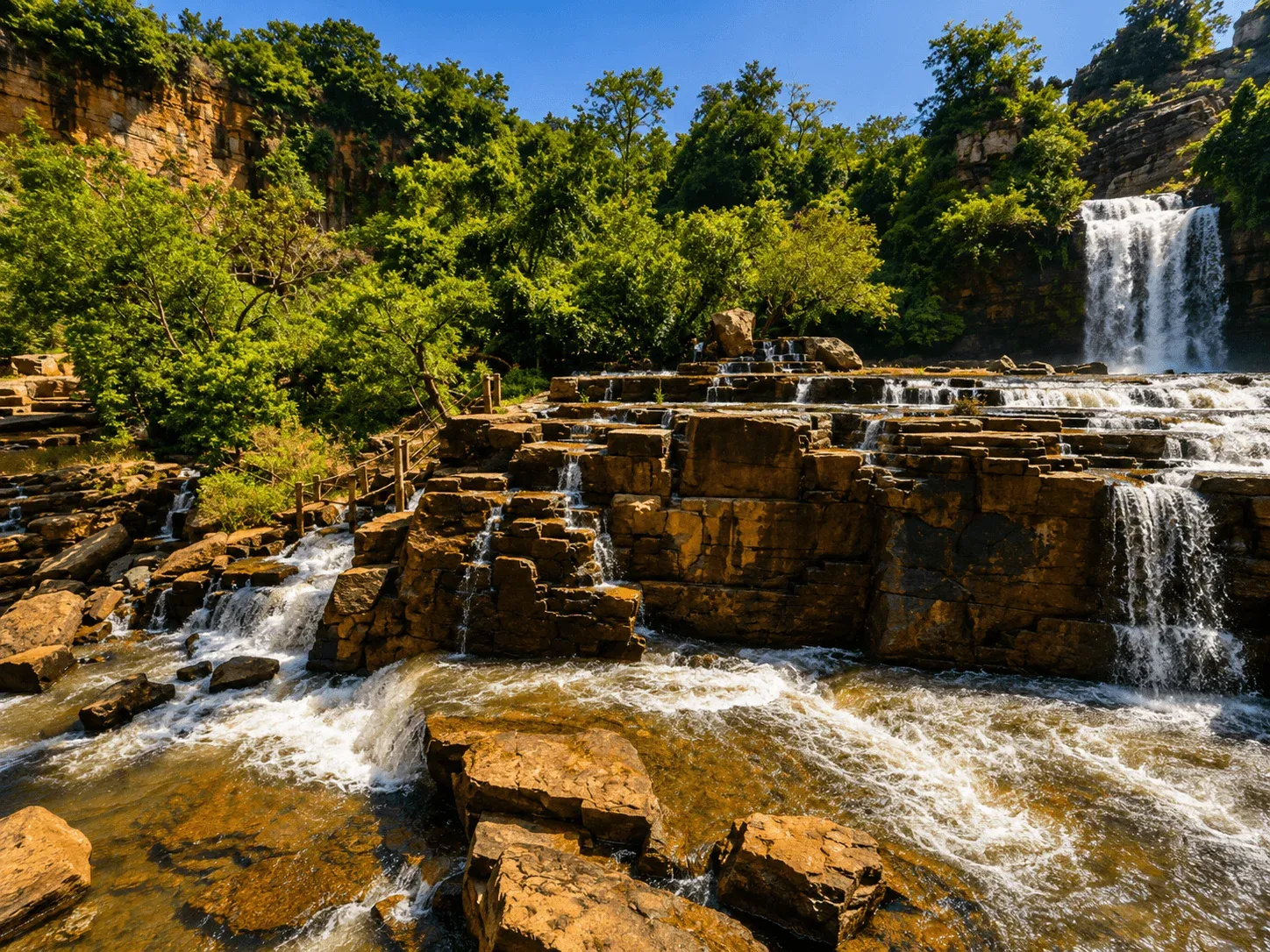
The Kanger River rises in the hills of Bastar and winds through one of India's smallest but most biodiverse national parks before cascading down the tiered limestone and sandstone shelves at Tirathgarh. The geological structure here — layered Deccan plateau rock gradually worn smooth by centuries of constant water flow — is what gives the waterfall its distinctive stepped appearance. Local tribal communities have known and revered this spot long before it appeared on any tourist map, using the river's water for daily life and ritual purposes throughout history.
Sacred Ground in Bastar
The name "Tirathgarh" itself carries spiritual weight — "Tirath" means a sacred pilgrimage spot in Hindi, and the falls have historically been considered a natural shrine by the indigenous Gond and Maria tribes of Bastar. Small temples and shrines dot the forest path leading to the waterfall, and the site sees a steady stream of local visitors who come not just for leisure but for the quiet sense of reverence the place inspires. The Bastar kingdom, which governed this entire forested belt for centuries, protected these forests as royal hunting reserves, inadvertently preserving the ecology around the falls.
Into the National Park Era
Kanger Valley National Park was established in 1982, formally protecting the 200 sq km stretch of forest that shelters Tirathgarh and the famous Kutumsar caves. The waterfall gained broader recognition through Chhattisgarh Tourism after the state's formation in 2000, when Bastar was promoted as an eco-tourism and tribal heritage destination. Before that, Tirathgarh was largely a local secret — visited mostly by Jagdalpur residents on weekend outings rather than travellers making special trips to see it.
Significance of Tirathgarh Waterfall
Tirathgarh holds a unique place among Chhattisgarh's natural attractions because it sits at the intersection of ecology, spirituality, and raw scenic beauty. Inside a protected national park, it offers something increasingly rare — a waterfall that is genuinely surrounded by untouched forest with no commercial development crowding the viewpoint. The multi-tiered structure means every level of the falls looks different: the top tiers move with speed and force, while the lower cascades spread out wide over smooth rock ledges into the pool below. For the Gond communities of Bastar, the site remains spiritually significant, connected to river worship traditions that predate recorded Bastar history.
Festivals & Celebrations Near Tirathgarh
Bastar Dussehra (September–October)
The world's longest Dussehra — a 75-day tribal festival centred in Jagdalpur, just 35 km from Tirathgarh — transforms the entire Bastar region during this period. Rooted in Gondi goddess worship rather than the Ramayana tradition of north India, this festival features processions, rituals, flower-based offerings, and a vibrant local fair culture that draws visitors from across the country. Planning a Tirathgarh visit during Bastar Dussehra gives you both natural beauty and cultural immersion in one trip.
Hareli Festival (July–August)
Hareli is Chhattisgarh's first major agricultural festival of the year, celebrated at the onset of the monsoon season — which also happens to be exactly when Tirathgarh is flowing at its most powerful. Villages across Bastar mark Hareli with rituals around farming tools, cattle, and nature worship. If you visit the falls in July or August, you may catch celebrations in nearby villages that warmly welcome curious travellers who show genuine interest in local traditions.
Did You Know? The Seven-Tier Structure
Tirathgarh's defining feature is its seven distinct tiers — each of which creates a separate pool and mini-cascade before the water moves to the next level. This stepped arrangement means that unlike a single-drop waterfall, you can actually sit beside different tiers and experience entirely different perspectives of the same falls. The bottom tier ends in a natural bathing pool where local families often wade in on weekday mornings when tourist footfall is low. The forest canopy above the falls is so thick that even on sunny days the spray creates an almost perpetual rainbow in the mist near the base — something that photographers visiting between 9 and 11 AM regularly capture to remarkable effect.
Travel Guide to Tirathgarh Waterfall
How to Reach Tirathgarh Waterfall
By Air: The nearest airport is Jagdalpur Airport — Maa Danteshwari Airport (JGB) — about 35 km from the falls, with limited flights from Raipur. For wider connectivity, Swami Vivekananda Airport Raipur (RPR) is the main hub, approximately 270 km away, from where shared taxis and bus services run to Jagdalpur.
By Train: Jagdalpur Railway Station (JDB) is the closest railhead at around 35 km from Tirathgarh, connected by trains to Visakhapatnam, Raipur, and Bhopal. Autos and taxis from the station are the most convenient onward option to the falls.
By Road: From Jagdalpur, take the road via Kanger Valley National Park — Tirathgarh lies inside the park, so entry fees apply. NH-30 connects Jagdalpur to Raipur. From Jagdalpur city, the drive to the falls takes about 45–50 minutes on forest roads.
Best Time to Visit
July to October is peak flow season when the Kanger River runs strong and the seven tiers are at full volume — the falls look dramatic but paths can be slippery. November to February is the most comfortable window: the water is clear, temperatures hover between 14–26°C, and the forest trails inside the park are pleasant to walk. Avoid visiting during the March–May summer peak as water flow drops significantly and the heat makes the trek uncomfortable.
Local Attractions
Kutumsar Cave (~5 km): One of India's longest natural limestone caves, also inside Kanger Valley — guided entry only, helmets provided.
Chitrakote Falls (~35 km): India's widest waterfall on the Indravati River — the Niagara of India — and the most famous landmark in Bastar.
Kailash Cave (~10 km): A striking limestone cave with formations resembling a Shiv Ling, located within the same national park.
Tips for Visitors
Buy your Kanger Valley National Park entry ticket at the gate before entering. The ticket covers both the waterfall and the caves if you plan to visit on the same day.
Wear grip footwear: The forest trail and rocks around each tier get extremely slippery during and after monsoon. Flip-flops will not serve you well here — proper closed shoes are essential.
Get there early: The park opens around 7 AM. Arrive by 8 AM to have the falls largely to yourself before tour buses from Jagdalpur begin arriving from 10 AM onwards.
Best shot: Position yourself on the rocks to the left of the main viewing platform at the top tier — from here you can frame the full width of the uppermost cascade against the tree line behind it.
Tirathgarh Waterfall Location
Image Gallery